Why startups fail at code documentation
Most engineering teams treat documentation as an artifact of the past rather than a dependency for the future.
By git11 Engineering · Tue Jul 07 2026 · 6 min read

A software engineer spends 60% of their time reading code they did not write. In startups, this figure often hits 80% because of high turnover and rapid pivots. Most of these teams have empty README.md files or outdated Notion pages that no one reads.
Documentation is not a chore. It is a technical debt instrument with a variable interest rate. If you ignore it today, you pay for it in onboarding time and regression bugs tomorrow.
The Freshness Trap
Starting a new repository feels clean. You write a short setup.sh and assume the logic is self-evident. You rely on tribal knowledge to move fast.
This works for the first three months. Then you hire your fifth engineer. They spend their first week asking where the environment variables live and why the docker-compose.yml fails on M2 chips.
Documentation fails because it lives outside the code. When you change a function signature in app/services/auth_service.py, you rarely remember to update a wiki page. The code and the description drift apart instantly.
README Anti-patterns
Most startup READMEs are useless. They either contain too much boilerplate or nothing at all. Engineers treat them like a legal requirement rather than a developer tool.
- They list dependencies that
package.jsonorgo.modalready track. - They explain basic Git commands that any competent hire knows.
- They omit the "Why" behind architectural decisions.
- They fail to document how to run a single test suite locally.
If your README requires more than three commands to get a local environment running, it is broken. If it does not explain how to deploy a hotfix to production, it is incomplete.
Architecture Decision Records
A Architecture Decision Record (ADR) is the most underrated tool in a startup. It is a simple markdown file that captures a point-in-time decision.
Create a docs/adr/ directory. When you decide to use PostgreSQL over MongoDB, write a one-page ADR. Name it 0001-use-postgresql-for-persistence.md. List the context, the alternatives you rejected, and the consequences.
- Explain the specific problem you faced. 2. Detail why the chosen solution fits the current constraints.
- List the trade-offs you accepted. 4. Link to the PR where the implementation started.
Future engineers will not have to guess why you chose a specific library. They can read the history in the repository itself. This prevents the same technical arguments from happening every six months.
The Failure of Wikis
Notion, Confluence, and Google Docs are where documentation goes to die. They are decoupled from the deployment cycle. They lack version control.
When you use a separate wiki, you create two sources of truth. The code is the ground truth. The wiki is a guess.
- Wikis do not support pull requests or code reviews.
- You cannot see who changed a paragraph in a wiki without messy audit logs.
- Search in third-party tools is usually worse than
greporripgrep. - Context switching between the IDE and the browser kills flow.
Documentation must live in the repository. If it is not in Git, it does not exist. Use the docs/ folder for everything.
Code Comments as Noise
Weak engineers use comments to explain what the code is doing. Good engineers use comments to explain why it is doing it. If you need a comment to explain a variable name, change the variable name.
Avoid // increment i by 1. This is visual noise. It slows down the reader.
Instead, use comments to warn about edge cases. For example, explain why a specific sleep(200) is necessary in a legacy integration test. Explain why you used a bitwise AND instead of a standard logical operator for performance.
- No comments that restate the code.
- No commented-out blocks of code; use Git history for that.
- No TODOs without an assigned Github Issue number.
- No JIRA links without a summary of the ticket.
Onboarding Latency
The true cost of bad documentation is onboarding latency. This is the time it takes for a new hire to ship their first meaningful PR.
In a healthy startup, this is 48 hours. In most startups, it is two weeks. This is a massive waste of capital.
Engineers spend those two weeks in meetings. They ask senior developers to explain things that should be written down. This pulls your most expensive talent away from deep work.
Automated Verification
If documentation is not tested, it is dead. Tools like doctest in Python or rustdoc in Rust ensure that code examples in your docs actually run.
Every snippet in your documentation should be extractable and runnable. If the code changes and breaks the example, the CI/CD pipeline should fail. This is the only way to prevent documentation rot.
- Run linter checks on your Markdown files.
- Use
markdown-lintto enforce technical writing standards. - Check for broken internal links in your
docs/folder. - Verify that setup scripts work on clean OS installs every week.
The Audience Problem
Engineers often write for the wrong person. They write for themselves in the present. This is a mistake.
You are writing for your successor. You are writing for yourself at 3:00 AM on a Saturday during an incident response.
During an outage, no one wants to read a 20-page design doc. They want a runbook. They want a list of cURL commands to check service health. They want to know which S3 bucket holds the backups.
Strategic Ignoring
You cannot document everything in a startup. You must choose what to ignore. Document the interfaces, not the implementations.
Document the public API of your modules. Document the message formats in your RabbitMQ queues. Document the database schema and the migrations.
Do not document internal helper functions that change every week. This is an exercise in futility. Focus on the boundaries where different systems or different people meet.
The Role of AI
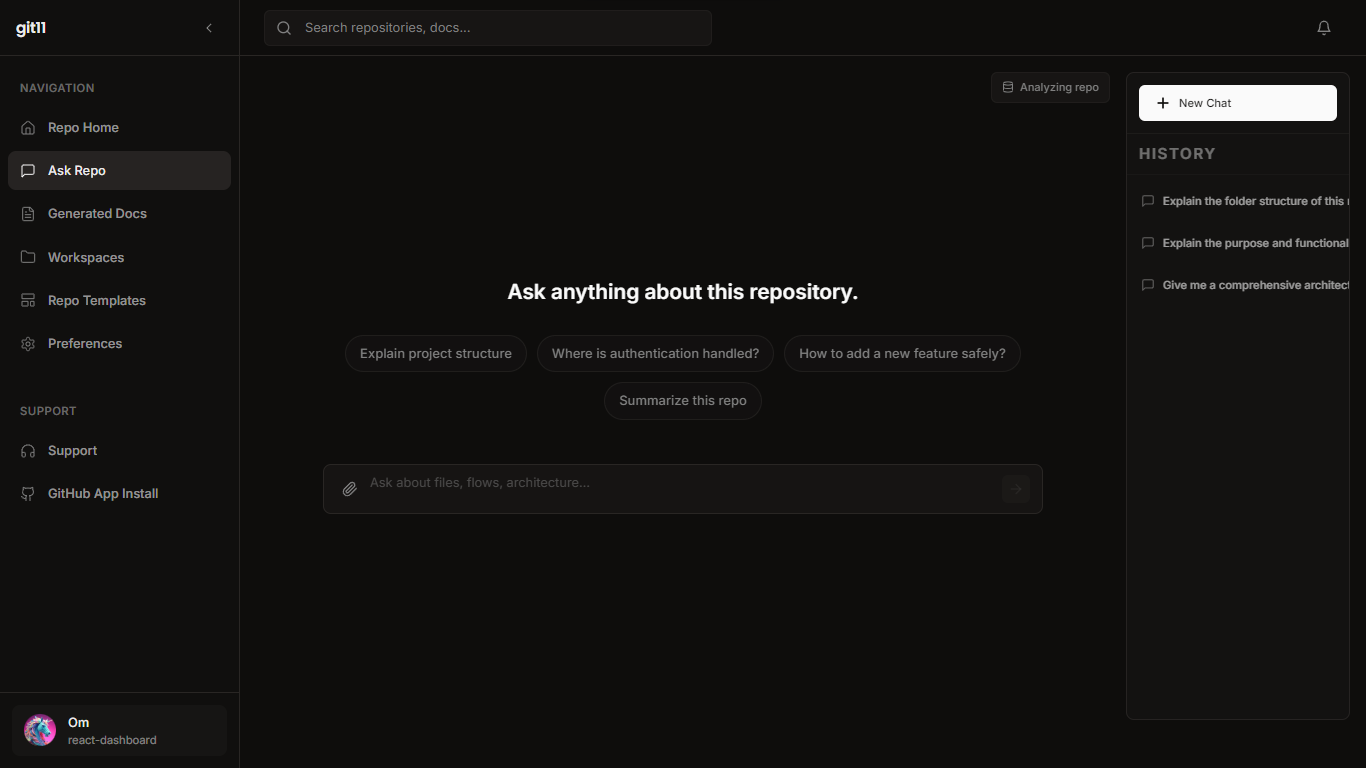
Artificial intelligence is changing how we digest documentation. Tools like git11 allow you to query a codebase as if it were a document. This does not replace manual documentation; it amplifies it.
An LLM can summarize a 500-line file, but it cannot know why you chose to skip a specific validation step for a VIP client. You still need to provide the context.
Use AI to generate boilerplate docs. Use it to find inconsistencies. But keep a human in the loop for the high-level architecture. A machine can describe the 'how' but often fails at the 'why'.
Maintaining Momentum
The best time to write documentation is when you are finished with a feature but before you open the PR. It is the final step of the development cycle.
Do not create "Documentation Days" or "Cleanup Sprints." They never happen. They are symptoms of a failed engineering culture.
If a PR does not include the necessary documentation updates, it should be rejected. This must be a non-negotiable standard for the team. If the lead engineer breaks this rule, everyone else will too.
Require a docs/ update for every major architectural change. It takes ten minutes. It saves ten hours later.
Commit documentation in the same PR as the code.